Homemade Korean Kimchi Recipe
Introduction
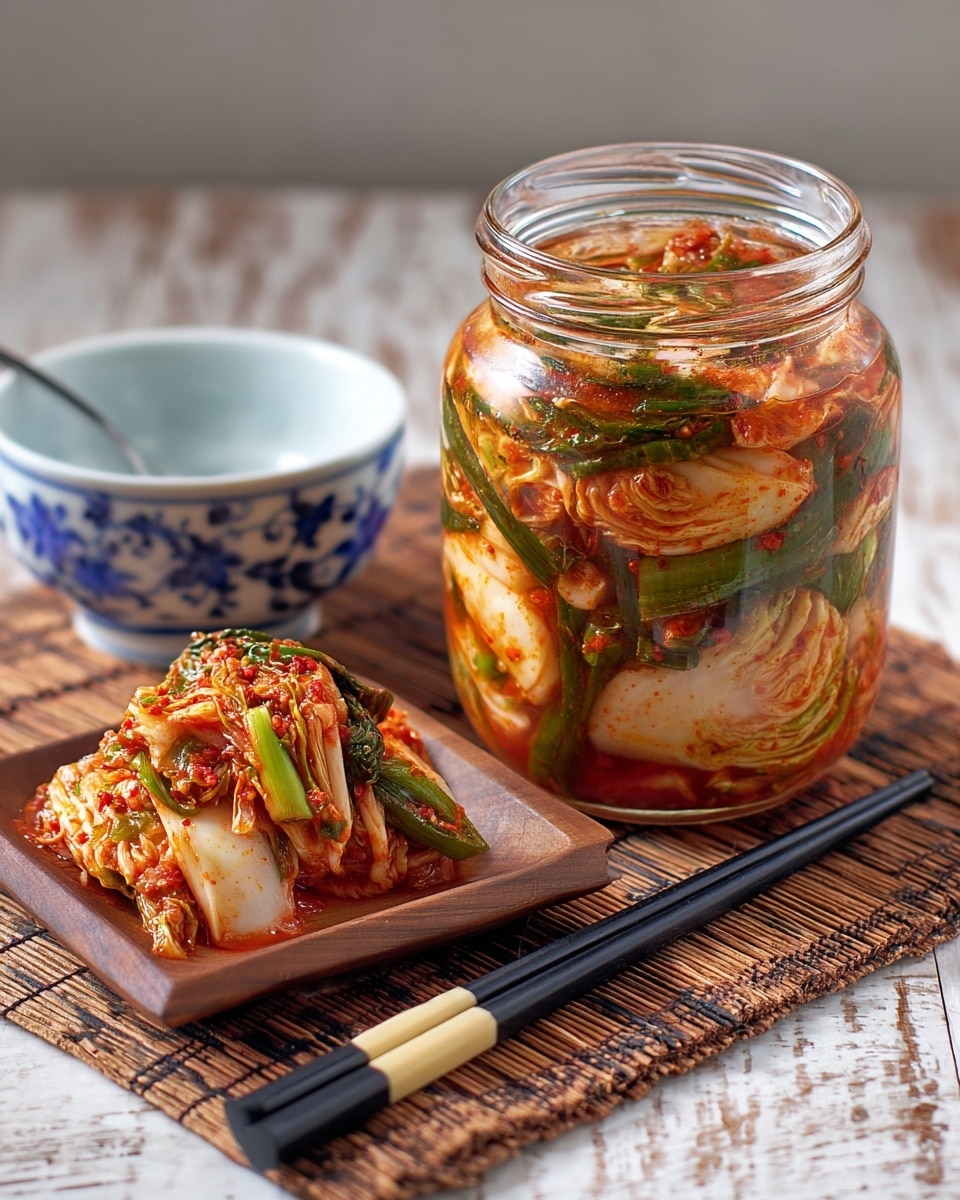
Homemade kimchi is a flavorful and tangy Korean staple that’s surprisingly easy to make at home. This fermented cabbage dish combines spicy, garlicky, and slightly sweet notes for a delicious side or condiment.
Ingredients
- 40 g finely ground sea salt, divided
- 1.2 kg Chinese cabbage, cut into 5 x 5 cm squares
- 370 g spring onion, cut into 5 cm pieces
- 49 g fresh ginger (about 9 cm piece), finely grated
- 10 cloves garlic, crushed or minced
- 30 g dried Korean chili powder (kochukaru), or other dried chili powder
- 1.5 tbsp granulated sugar
- 2 liters cold water
Instructions
- Step 1: Dissolve 30 g of the salt in 2 liters of cold water in a large jug.
- Step 2: Place the cabbage in a non-reactive container (glass, porcelain, or earthenware) of at least 2.5 liters capacity. Pour the salted water over the cabbage to fully submerge it. Cover with a plate and leave at room temperature for about 12 hours to start fermenting. You will notice bubbles and a slight sour smell.
- Step 3: Drain the cabbage, reserving the brine for later use.
- Step 4: In a bowl, mix the drained cabbage with spring onion, grated ginger, crushed garlic, chili powder, granulated sugar, and the remaining 10 g of salt.
- Step 5: Transfer the mixture into a sterilized 2-liter jar. Pour enough reserved brine over the cabbage to keep it submerged.
- Step 6: Pour some of the remaining brine into a plastic bag, seal it tightly, and place it on top of the cabbage to keep it submerged in the brine.
- Step 7: Store the jar in a room with a temperature below 20°C to ferment for 4 to 6 days, or until it reaches your preferred level of sourness.
- Step 8: Remove the plastic bag, seal the jar, and refrigerate. Homemade kimchi can last up to 3 months in the fridge.
Tips & Variations
- If you prefer less heat, reduce the amount of chili powder or use a milder variety.
- Add julienned carrots or radish for extra crunch and flavor.
- Ensure cabbage is fully submerged during fermentation to prevent mold growth.
- Use clean, sterilized jars and utensils to avoid unwanted bacteria.
Storage
Store homemade kimchi in a sealed jar in the refrigerator. It can keep for up to 3 months, developing deeper flavors over time. Refrigeration slows fermentation but does not stop it entirely. Before serving, stir well, and you can enjoy it cold or slightly warmed.
How to Serve
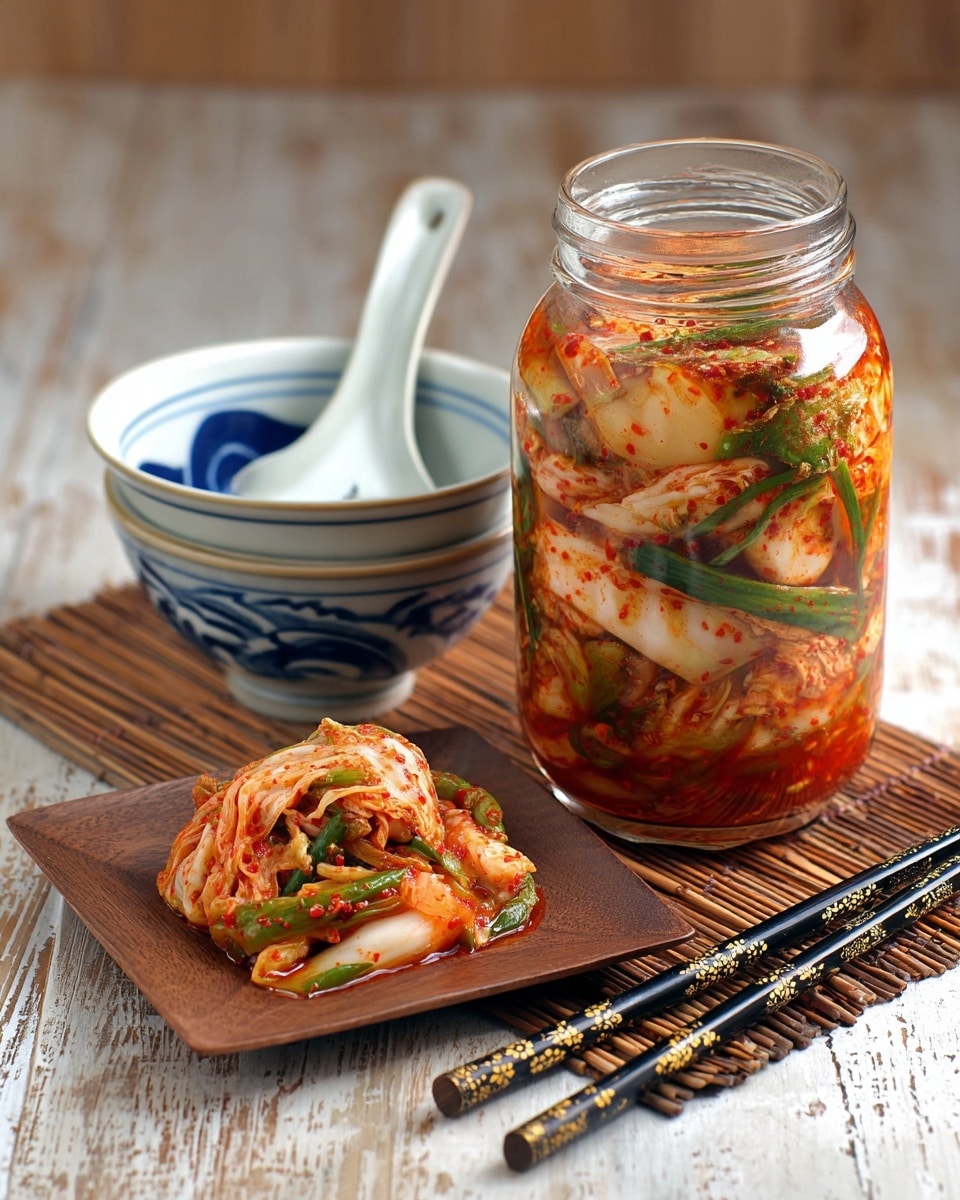
Serve this delicious recipe with your favorite sides.
FAQs
Can I use regular chili powder instead of Korean chili powder?
Yes, you can substitute with other dried chili powders, but the taste and heat level may vary. Korean chili powder (kochukaru) offers a unique flavor that’s slightly smoky and fruity.
How do I know when my kimchi is ready?
After 4 to 6 days of fermentation at room temperature (below 20°C), the kimchi should develop bubbles and a pleasantly sour aroma. Taste it during fermentation to find the flavor you prefer—longer fermentation means stronger sourness.
Print
Homemade Korean Kimchi Recipe
- Total Time: 12 hours 20 minutes (plus 4-6 days fermentation)
- Yield: Approximately 2 liters of kimchi (about 8 servings) 1x
- Diet: Vegan
Description
This recipe guides you through making traditional homemade kimchi, a flavorful and spicy fermented Korean side dish made with Chinese cabbage, spring onions, ginger, garlic, and Korean chili powder. The fermentation process creates a tangy, probiotic-rich condiment that can be enjoyed fresh or aged to your taste preference.
Ingredients
Saltwater Brine
- 30 g finely ground sea salt
- 2 liters cold water
Main Ingredients
- 1.20 kg Chinese cabbage, cut into 5 x 5 cm squares
- 40 g finely ground sea salt
- 370 g spring onion, cut into 5 cm pieces
- 49 g fresh ginger (about 9 cm piece), finely grated
- 10 cloves garlic, crushed or minced
- 30 g dried Korean chili powder (kochukaru) or other fine dried chili powder
- 1.5 tbsp granulated sugar
Instructions
- Prepare Saltwater Brine: Dissolve 30 grams of sea salt in 2 liters of cold water in a large jug to create the brine for soaking the cabbage.
- Soak Cabbage: Place the cut Chinese cabbage into a 2.5-liter container made from an inert material such as glass or porcelain. Pour the prepared salted water over the cabbage until it is fully submerged. Cover with a plate to hold the cabbage down and leave it at room temperature for about 12 hours. During this time, fermentation will begin; you will notice bubbles forming and the cabbage developing a slight sourness.
- Drain and Reserve Brine: After 12 hours, drain the cabbage, reserving the brining liquid (pickle) as it will be used later to keep the kimchi submerged.
- Mix Vegetables and Seasoning: In a large bowl, combine the drained cabbage with chopped spring onions, grated ginger, minced garlic, dried chili powder, granulated sugar, and the remaining 40 grams of sea salt. Mix thoroughly to evenly coat all ingredients.
- Pack into Jar: Transfer the seasoned cabbage mixture into a sterilized 2-liter glass jar. Pour the reserved brining liquid over the cabbage to keep it submerged.
- Submerge Cabbage: Place some of the remaining marinade into a plastic bag, seal it tightly, and position it on top of the cabbage inside the jar. This weight keeps the cabbage fully submerged under the brine during fermentation.
- Ferment: Store the jar in a cool room with a temperature not exceeding 20°C (68°F). Allow the mixture to ferment for 4-6 days or until it reaches your desired level of sourness and flavor.
- Store: After fermentation, remove the plastic bag weight, seal the jar tightly, and transfer it to the refrigerator. The kimchi will keep well for up to 3 months when refrigerated.
Notes
- Use pure sea salt without additives for best fermentation results.
- Temperature control during fermentation is crucial; too warm and the kimchi may ferment too quickly or spoil.
- Korean chili powder (kochukaru) provides authentic flavor and color but can be substituted with other dried chili powders adjusted to taste.
- Always keep the cabbage submerged to prevent mold growth during fermentation.
- Sterilizing the jar before packing helps prolong shelf life and prevents unwanted bacteria.
- Prep Time: 20 minutes
- Cook Time: 0 minutes
- Category: Fermenting
- Method: No-Cook
- Cuisine: Korean
Keywords: kimchi, fermented vegetables, Korean recipe, homemade kimchi, spicy fermented cabbage